
Search Articles
clear search termsLow Thyroid Function and Estrogen Dominance
Here’s a powerful tip that will help you to support many women who seek help via a functional medicine perspective: Be on the lookout for symptoms of low thyroid function in those who have an overload of estrogenic effects (what we commonly call “estrogen dominance”).
We talk often in our classes about the epidemic of unrecognized, subclinical hypothyroidism. It stems from many causes… reliance on an overly broad “normal” reference range that includes many hypothyroid individuals, lack of awareness in conventional practices of the full scope of hypothyroid symptoms, and failure to run a full thyroid panel in assessing thyroid function (aka over-reliance on TSH as being accurately indicative of intracellular thyroid hormone function). As shared with you before, we also have an epidemic of estrogen dominance, fueled in part by the widespread effects of endocrine disrupting chemicals. And these two dynamics are more interconnected than you might imagine!
High estrogenic action often increases thyroid binding globulin (an example of a study showcasing the effect here) which prevents thyroid hormone from being able to have cellular effects. This is one (of many) reasons why a person can have “normal” or even optimal total thyroid hormone levels and still be suffering (legitimately) from low thyroid intracellular function (e.g. constipation, weight gain, fatigue, lethargy, high LDL cholesterol, GI bloating/reflux, foggy thinking).
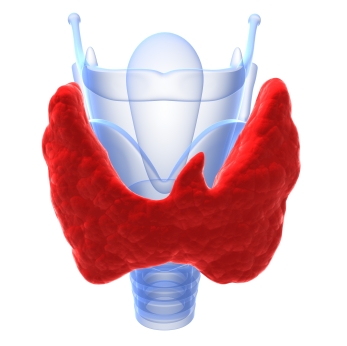 There is a bidirectional relationship at play here as well. Keep in mind that estrogen “dominance” doesn’t necessarily mean high estrogen (though it might – especially in the obese); it may also (or instead) involve imbalance with other hormones such as progesterone and testosterone. A hypothyroid state can promote anovulation and thus inadequate progesterone, and some clinical studies suggest that increasing progesterone when it is suboptimally low (which balances estrogen) can increase Free T4 thyroid hormone. Other common reasons for estrogen dominance include high exposure to xenoestrogens (endocrine disrupting chemicals) or poor detoxification and clearance of estrogen (worsened by hypothyroidism), both of which may result in excessive estrogenic (and potentially carcinogenic) metabolites. Unfortunately these types of imbalances are simply not going to show up in conventional labwork, especially typical sex hormone blood markers. There is great utility in combining urinary hormone metabolite testing with blood hormone testing. Common symptoms of estrogenic overload or “dominance” include debilitating PMS, heavy/clotty periods, headache/migraine, anxiety, increased belly fat, tender breasts/fibroids, and infertility. There are many functional imbalances that patients may need help resolving with your expertise and partnership e.g. estrogen synthesis (e.g. reducing body fat), decreased exposure to estrogenic substances (e.g. xenoestrogens), estrogen balancing (e.g. vitex to boost progesterone if prolactin is elevated), estrogen clearance (e.g. methylation, sulfation, constipation), aromatase inhibition (e.g. zinc, ground flaxseed), and/or reduced receptor sensitivity (e.g. magnesium). These are powerful areas of functional medicine interconnectedness in the body that you can learn to use in your practice with confidence!
Please be on the lookout for women who wrestle with symptoms of both estrogen dominance and low thyroid function (which includes many longsuffering women who are searching for answers and are frustrated with conventional medicine’s inability to get to the root of their struggles). Make sure that you fully assess their actual thyroid hormones (a full panel, not just TSH); you will find that many have suboptimal Free T4 (and even*more* will have suboptimal Free T3, for a variety of reasons – if you’re new to this topic, we can teach you how to do this with confidence). You may even uncover some chronic autoimmune thyroid dynamics (alas, this empowering Aha happens to our practitioners all the time!). Then fully assess their sex hormone balance, detox capability, and xenoestrogen exposure.
Interconnected hormonal dis-ease is a great example of the power of functional medicine insight and support. I hope this quick clinical tip serves you and your patients and clients!
Warmly,

P.S. If you are passionate about transforming healthcare through the power of functional medicine, we encourage you to learn more about SAFM’s practitioner training programs. Enrollment for our next cohort is now open!
To receive weekly clinical tips for practitioners – like this one – right to your inbox, register here.
Follow us on Facebook and/or on Youtube to gain more rich clinical content.
10 Questions for “Low Thyroid Function and Estrogen Dominance”
-
5
-
5.1
-
-
4
Ann Woelfel says:
I am so confused about the foods that either is bad for hypothyroidism and good for estrogen dominance. Is there a clear list of foods that are good for the combination of hypothyroidism/estrogen dominance?
-
4.1
I assume that you are referring to the seemingly conflicting information that cruciferous vegetables are good support for estrogen metabolism but they are also a source of goitrogens that may negatively affect the thyroid. It is a valid concern. However, the goitrogens in various splendidly healthy whole foods can be minimized and also their effect on the thyroid will depend on the iodine status. You may appreciate this short review:
https://www.ncbi.nlm.nih.gov/pmc/articles/PMC4740614/
Thus, it is quite possible to adopt a low glycemic diet (very important first step in stopping the estrogen dominance) that is rich in fiber and cruciferous veggies that are prepared in a way to support the liver function in the metabolism of sex hormones AND also support the thyroid health. To take a deeper dive into this high-level interconnectedness I recommend exploring in-depth the SAFM “Adrenal and Thyroid: Myths and Truths” and the “Hormones Demystified” deep dive clinical courses:
https://schoolafm.com/clinical-courses/
-
-
3
Kristina says:
Does estrogen dominance cause Hypothyroidism or does Hypothyroidism cause estrogen dominance? My functional practitioner had me take the DUTCH test and it showed my Progesterone very low, and my estrogen very high. BUT, she said I wasn’t producing an excess of estrogen; rather, I’m just not getting rid of the estrogen and it’s being reabsorbed. She has allowed me to go on progesterone, but didn’t give me direction on how much to use. After about 3 cycles, it has exacerbated my estrogen dominant symptoms. So I am wondering what avenue to take with my Functional Dr.?? Further treat Low Progesterone or more thyroid treatment? I have Hashi’s, but diet has almost brought my antibodies down to 0. My labs indicate my FT4 and FT3 are within range.
-
3.1
SAFM Team says:
Yes! Hypothyroidism can overtly promote estrogen dominance via several pathways including reduced liver clearance of estrogen, impaired immunity in the gut which allows overgrowth of beta glucuronidase-producing microbes, or low progesterone due to anovulation as a result of increased prolactin. This may interest you: https://www.ncbi.nlm.nih.gov/pmc/articles/PMC3657979/. And estrogen dominance can promote hypothyroidism via several pathways including increased levels of thyroid binding globulin due to increased estrogen levels or increased anxiety (from ED) promotes higher cortisol which impairs thyroid hormone action via increased levels of Reverse T3 which competes for receptors with Free T3. Indeed, it’s all so interconnected! Indeed, a person can wrestle with estrogen dominance for many reasons including high estrogen synthesis, high xenoestrogen uptake (which does not show up on a DUTCH but will indeed cause symptoms – sometimes dramatically so), low progesterone to counter even mild/moderate estrogen levels, poor estrogen metabolism (e.g. creating excess of potentially carcinogenic 4-OH metabolites or insufficient methylation of OH metabolites overall which is what reduces their estrogenic nature and renders them not potentially carcinogenic as well). A key role of progesterone is to sensitize estrogen receptors, so it’s extremely common for symptoms of estrogen dominance to be exacerbated during the first 1-2 months of progesterone usage – a good reason for ramping up dosage quite slowly and progressively in order to minimize these symptoms. I would also always in this situation put a large focus on eliminating estrogen-exacerbating chemicals from personal hygiene products and other lifestyle choices (e.g. avoiding BPA/BPS, choosing organic foods). Alas, I cannot comment on your individual case, but I hope these concepts are helpful to you in sorting out intuitively what will be best for your unique body.
-
-
2
Juliana Natividad says:
Hello, thanks for the refreshing read. I am having a hard time finding a doctor/NP/PA who will order a hormone test for me. Tried my OB as well. I am an RN and I feel like I need to get my hormone levels checked specially because my thyroid, although within normal range, is lower functioning. Is there a reason why providers don’t like to get a pts hormones checked? Any tips on getting them to order it? I’m confused and curious. Thank you.
-
2.1
Well, certainly I can’t know the mind of any specific practitioner. I will say overall to remember that conventional practitioners are generally in the business of diagnosing and treating disease. They are not typically in the business of preventing disease or assessing upstream imbalances – not because they don’t care but because it’s not their expertise or their training. When they code for labwork to be covered by insurance, they are legally stating their belief that there is a notable disease process at play (or that there is a notable risk of it) that needs to be assessed. In general functional medicine tends to take a much more proactive and preventive look at upstream dynamics, wanting to respond to them as early as possible to prevent downstream dysfunction. It’s important that patients be able to clearly and generously explain all the debilitating symptoms that are at pay with them to help their practitioner to see the justification for testing. Regardless, nearly all the time, a conventional practitioner is going to be open to only single-sample blood testing for hormones which is of exceedingly little utility (indeed unless there is an overt disease process happening in the gland or organ in question). My point is that even if they did order the labs for you, it would likely be woefully lacking in value to you. A functional medicine practitioner could order the powerful, multi-sample dried urine hormone testing for you (e.g. DUTCH, or you could order it yourself (e.g. dutchtest.com/shop/). The practitioner may or may not be able to garner any insurance coverage for the testing for you, depending on your policy specifics. In the functional medicine world at present, a frustrating but common reality is that the most helpful and targeted labwork is just not going to be covered by insurance. A reality, however, that I am confident will change as this movement grows!
-
-
1
Paula Youmell says:
A client just asked me about a connection between synthroid and lung cancer. Any thoughts?
-
1.1
Here is the study in question that caused a lot of uproar in 2013: https://www.ncbi.nlm.nih.gov/pmc/articles/PMC3765368/. First of all, I would say that this was a gross level correlation study that assessed aggregate level of synthroid intake with aggregate levels of lung cancer for a population in an area (not within an individual!). It would be just as accurate (and perhaps more so) to say that the same circumstances in a population that cause the need to use synthroid (hypothyroidism, Hashimoto’s) also cause lung cancer. And of course, this makes sense to us within the FM model! More specifically regarding the difference in lung cancer vs others (for which no correlation was found): animal studies have found that deiodination of T4 (to make T3 and downstream metablites) can happen in lung tissues but not as readily in the lungs as it does in other parts of the body. Perhaps this is the reason? It is also well understood that selenium and other nutrients are required for T4 to T3 conversion, and selenium directly helps to counter oxidative stress caused by thyroid hormone. But because this was a comparison really of synthroid sales within a region vs. lung cancer incidence, I would be careful attaching too much value to it.
-

Ask a Question
Practitioner clarification questions are welcome! Please do not post personal case inquiries.
© 2017-, The School of Applied Functional Medicine | Company Values | Terms of Use | Legal/Privacy | Contact




web development by: Gordon Multimedia
Hi, I am new to functional medicine, but have been a practicing NP for 10 years. If your patients are complaining of fatigue, they are likely to get many of their labs covered by insurance. Since most of the people we see complain of fatigue, I almost always include that code. It is a precursor of so many bad diagnoses, that labs exploring fatigue usually get paid for. So make sure your patients tell their medical provider if they have fatigue. It may grease the wheels for getting those labs ordered!